
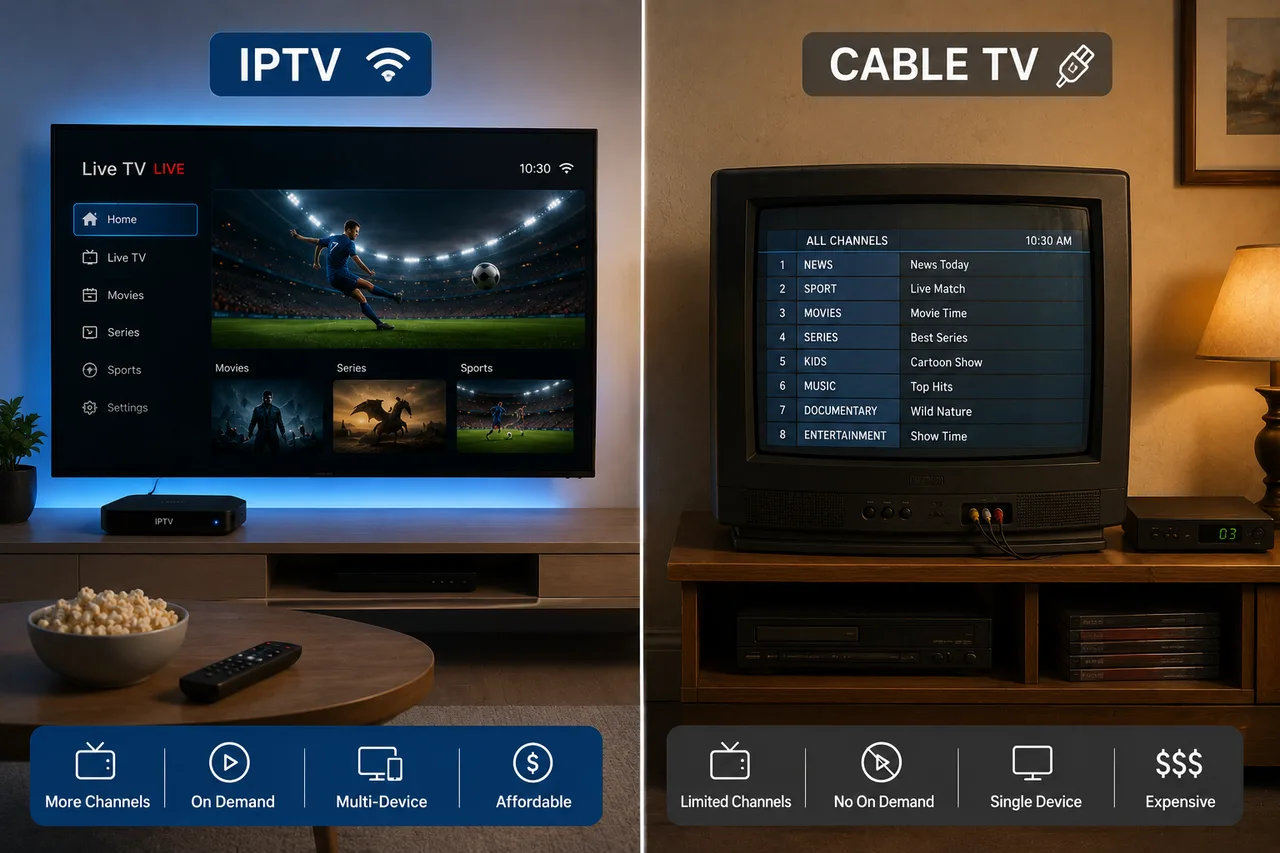
If you're deciding between sticking with cable or switching to IPTV, the honest answer is: it depends what you value most. IPTV generally wins on cost, flexibility and content breadth; cable still has an edge in a few specific situations. This guide walks through the real trade-offs so you can decide for your own household, rather than assuming one option is universally better.
— Wikipedia, "Cord-cutting"“In broadcast television, cord-cutting refers to the pattern of viewers, known as cord-cutters, canceling their subscriptions to multichannel television services available over cable or satellite.”
IPTV vs cable at a glance
These figures are illustrative examples to show the general shape of the trade-off, not a quote for any specific plan — always check current pricing directly with a provider before deciding.
| Factor | Typical Cable | Typical IPTV |
|---|---|---|
| Monthly cost | Often $80–$150+, frequently rising after a promo period | Usually lower, with multiple plan lengths to compare |
| Contracts | Often 1–2 year commitments with early-termination fees | Commonly month-to-month or short-term plans |
| Installation | Technician visit often required | Self-setup via an app, usually minutes |
| Equipment | Set-top box rental, sometimes multiple | Works on devices you likely already own |
| Channel flexibility | Fixed bundles, hard to customize | Often broader international/niche channel selection |
| VOD library | Limited, provider-dependent | Large on-demand movie/series libraries are common |
| Portability | Tied to the installed location | Watch from any location with internet access |
| Internet dependency | Independent of your home internet (uses coax) | Fully dependent on a stable internet connection |
| EPG | Standard, built into the box | App-dependent, varies by provider |
Swipe to see more →
Where IPTV generally wins
Cost and contracts
No equipment rental fees, no installation technician, and plans that scale with how many people in your household are watching at once — often with no multi-year contract at all.
Flexibility and portability
Watch on your phone or laptop away from home, cancel or change your plan without a multi-year commitment, and skip the truck-roll wait time for setup.
Content breadth
IPTV providers like Sonix IPTV aggregate channels from dozens of countries and languages — international coverage that most cable packages simply don't offer, plus large VOD libraries for on-demand viewing. See our full sports channel guide if live sports are a priority for your household.
Where cable still has an edge
Some regions have limited or unreliable internet infrastructure, and a genuinely stable connection is required for a good IPTV experience — cable's dedicated coax line doesn't compete with your household internet for bandwidth. If your internet connection is unreliable or already saturated by other devices, that's a real factor worth weighing. Cable also sometimes includes bundled home phone or internet discounts that can offset its higher sticker price.
How to decide
- Check your actual internet speed and stability first — see our buffering and connection guide for what to look for
- Compare real total monthly cost, not just the advertised promo rate
- List the specific channels and content your household actually watches
- Decide how much portability (watching away from home) matters to you
- Review the provider's terms of service and legitimacy before subscribing to anything
Curious what to look for in an IPTV provider specifically? Read our guide on choosing the best IPTV service, or contact Sonix IPTV to ask questions before you switch.